
Fire-retardant wood-based materials thanks to enzymes from melons: Turning sawdust into fire protection materials
Dübendorf, 19.03.2026 — What usually ends up in the incinerator today could protect houses from fire tomorrow. Researchers at ETH Zurich and Empa have found a way to press sawdust with a mineral binder to create a robust, flame-retardant material that is even recyclable.
Every time a tree trunk is sawn, it creates sawdust. Millions of tons of sawdust are produced every year worldwide, with most of it ending up in incinerators. This releases the carbon dioxide stored in the wood back into the atmosphere – which is less than ideal from an environmental perspective. Now, a team of researchers at the Chair of Wood Materials Science at ETH Zurich and Empa have developed a process that can convert sawdust into a recyclable and environmentally friendly composite using mineral struvite, a crystalline, colorless ammonium magnesium phosphate. This, in turn, keeps the sawdust in the material cycle for longer.
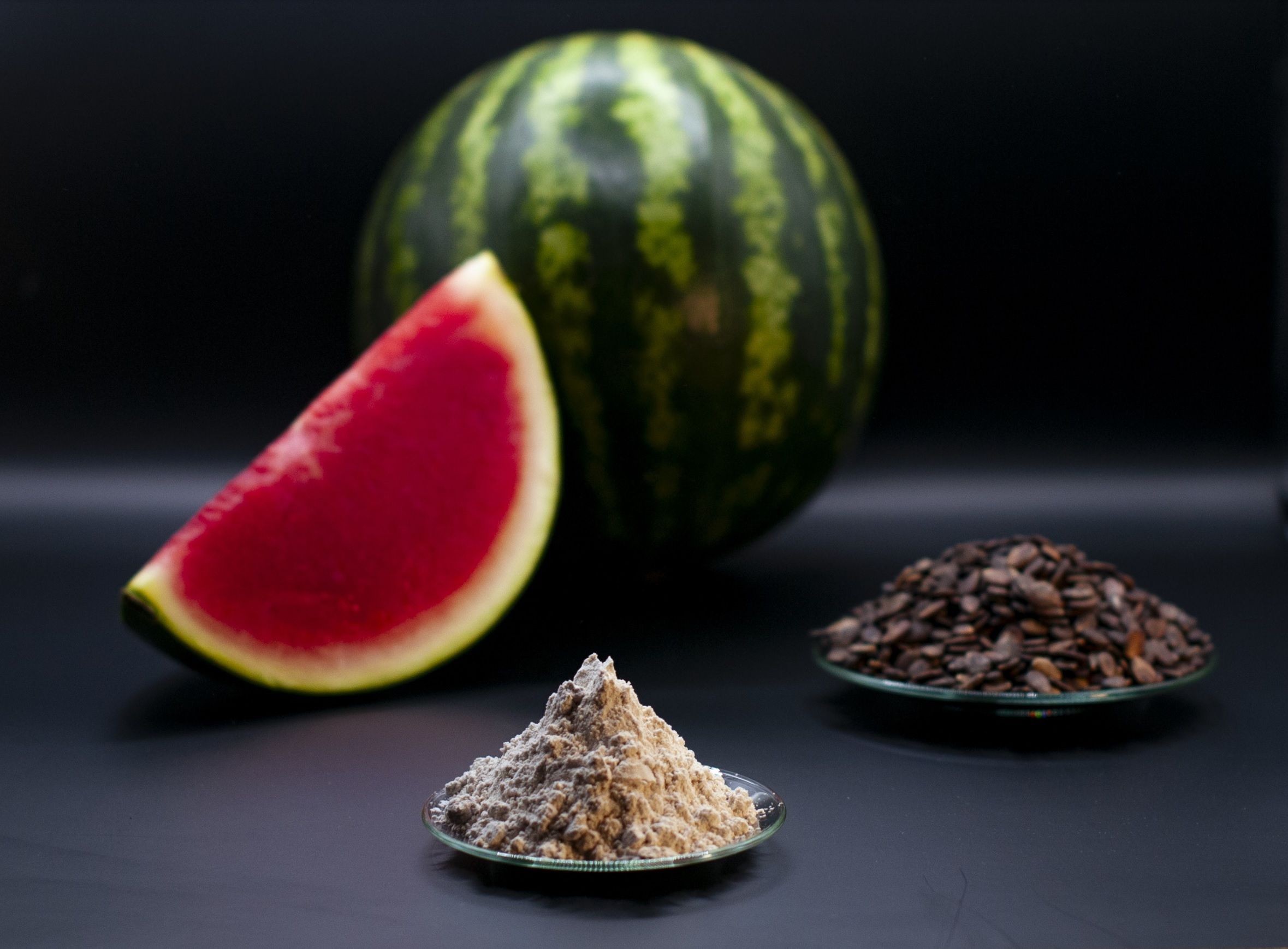
Struvite has long been known for its fascinating fire protection properties. So far, however, it had proven difficult to combine the mineral with sawdust particles due to its crystallization behavior. Now, the researchers are using an enzyme extracted from watermelon seeds to control the crystallization of struvite in an aqueous suspension with sawdust. This process creates large crystals that fill the cavities between the sawdust particles and bind them together firmly. The material, which is pressed for two days, is then removed from the mould and dried at room temperature.
Wood elements that protect themselves
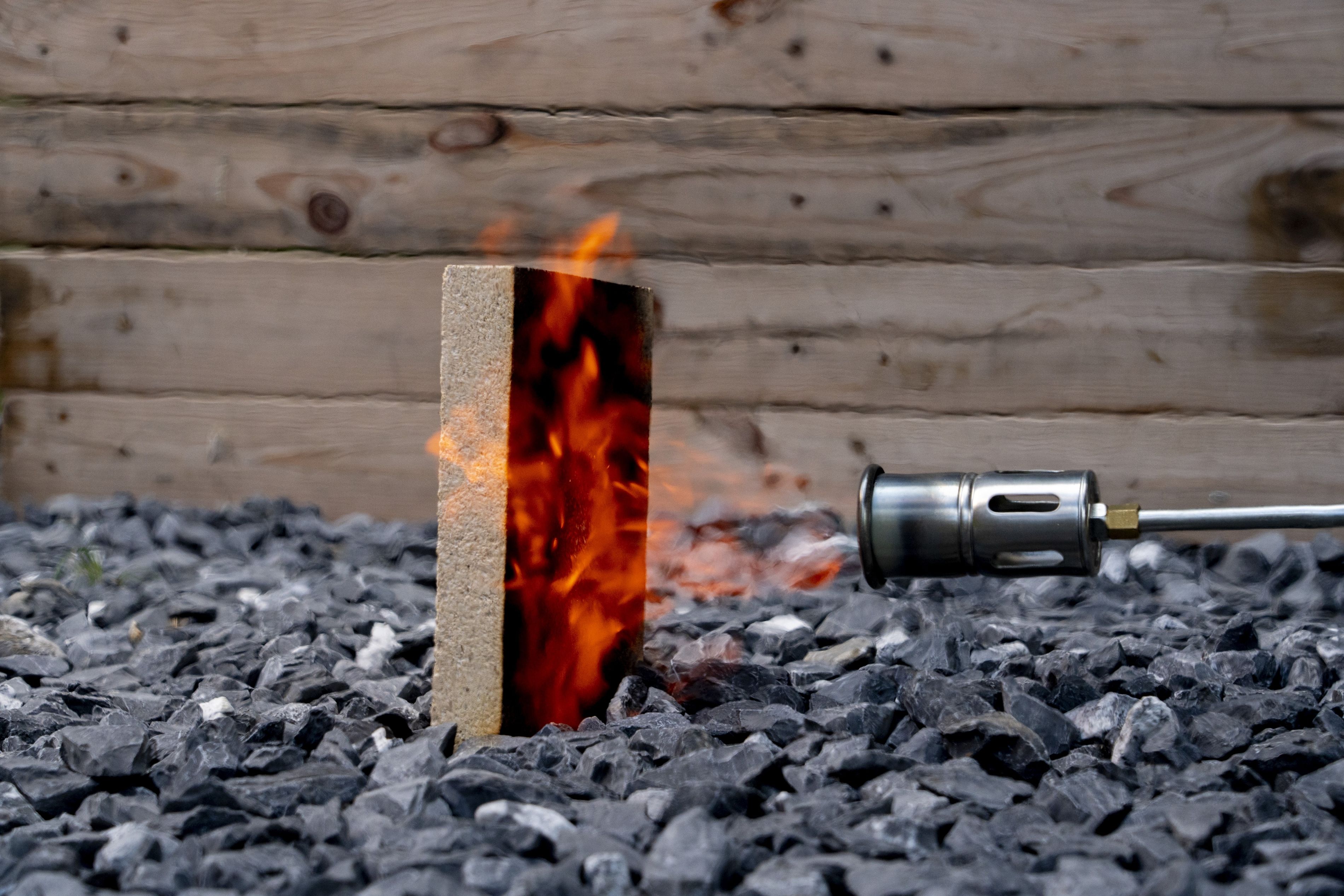
“The material is more resistant to pressure perpendicular to the grain than the original spruce timber,” explains Ronny Kürsteiner who developed the process as part of his doctoral thesis under Ingo Bungert, Professor of Wood Materials Science. The new material’s mechanical properties and excellent fire resistance make it particularly suitable for internal partitions. That’s because struvite is not only non-combustible, it also helps to actively increase fire resistance. When heated, the mineral breaks down, releasing water vapor and ammonia. This process absorbs heat from the surrounding environment, producing a cooling effect. The non-combustible gases that are released also displace the air, preventing the fire from spreading further and causing the material to char quicker.
The team partnered with researchers at the Polytechnic University of Turin who tested the material in a so-called cone calorimeter – a standardized test that simulates how a material behaves when exposed to an external heat source. While untreated spruce ignites after around 15 seconds, the struvite sawdust composite takes more than three times as long. And: Once ignited, a protective layer of inorganic material and carbon forms quickly, protecting the material from further fire spread. “The struvite sawdust panels essentially protect themselves,” says Kürsteiner.
Initial estimates have shown that the material could achieve the same fire protection class as conventional cement bonded particle board, although larger-scale flame retardancy tests are still required to confirm this. Cement bonded particle board is currently widely used in internal partitions for flame protection applications. It contains 60 to 70 per cent cement by weight, making it heavy and giving it a poor carbon footprint due to the high level of energy involved in cement production. The struvite sawdust board, on the other hand, contains just 40 per cent binder, thus making it significantly lighter.
Easy to recycle
Another advantage of this innovative composite compared to other composite building materials is that unlike cement boarded particle board, for example, it doesn’t end up in hazardous waste landfill after demolition. Once removed, struvite sawdust board can be broken down into its individual components by breaking it up mechanically in a grinder and heating it to just over 100°C. This releases the ammonia and allows the sawdust to be sifted out. The mineral raw material for struvite, known as newberyite, is then precipitated again as a solid.
Newberyite can then be mixed with sawdust once more to form composites. This new material could therefore be an important contributor to the circular economy in future. It can also be used as a natural fertilizer, which has interesting implications for agriculture because it releases the bound phosphorus that plants need for growth in a slow and controlled manner.
Next, the researchers want to continue optimizing and scaling up the production process. Whether the material will catch on in the construction industry depends primarily on the cost of the binder, says Kürsteiner. Struvite is relatively expensive compared to polymer binders or cement. This could change, however, if they can tap into another cycle: struvite accumulates in large quantities in sewage treatment plants where it clogs the sewage pipes. “We could use these deposits as a raw material for our building material,” says Kürsteiner.
Further information
Prof. Dr. Ingo Burgert
Cellulose & Wood Materials
Phone +41 58 765 4434
ingo.burgert@empa.ch